What Kind of Origin Is This?
By Steven Dragonn, Chief curator of Kids’ Triennial of Canton, February 27, 2015
On January 25, 2015, the Kids’ Triennial of Canton concluded successfully amidst great excitement. Over the short span of six days, nearly 20,000 people visited the art museum. As a concentrated display of the three-year action plan initiated by the Guangzhou Education Bureau and the Art Research Branch of the Guangzhou Education Society’s Early Childhood Education Professional Committee (referred to as the “Art Research Society”), this exhibition also served as a comprehensive survey of the state of early childhood art education across Guangzhou.
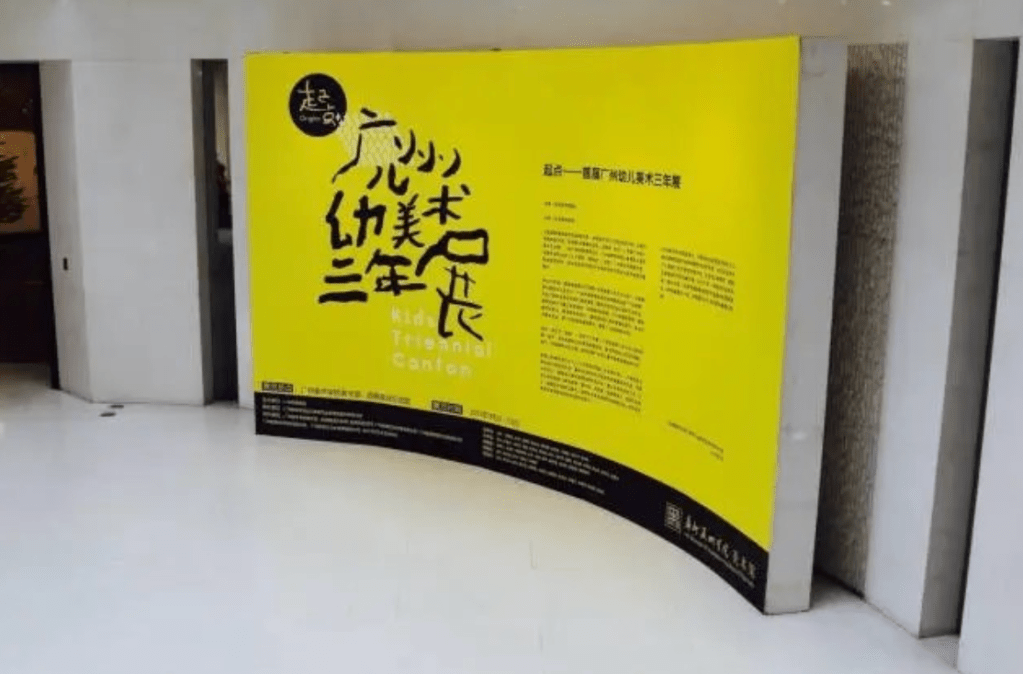
Although this inaugural Kids’ Triennial of Canton wasn’t perfect, it largely achieved the expected goals of showcasing and teaching. It received widespread recognition from professionals in art and education, as well as the general public. This success lays a solid foundation for continuing the triennial in the future, ensuring that early childhood art projects with a three-year theme cycle can develop and take root in Guangzhou.
This is exactly the outcome we hoped for when planning the exhibition a year ago. I extend my heartfelt thanks to the Guangzhou Education Bureau, the Art Research Society, Guangdong Provincial Yucai Kindergarten No. 2 Branch, the Memorial Hall of Lingnan Painting School, and the Contemporary Arts Edu-Institute. From the strong support of leaders, jurors, and council members, who trusted my curatorial approach from start to finish, to the active participation of colleagues at all levels in resolving challenges, everyone ensured that children’s unbridled imagination and innate creativity filled the solemn halls of the art museum, touching every visitor.
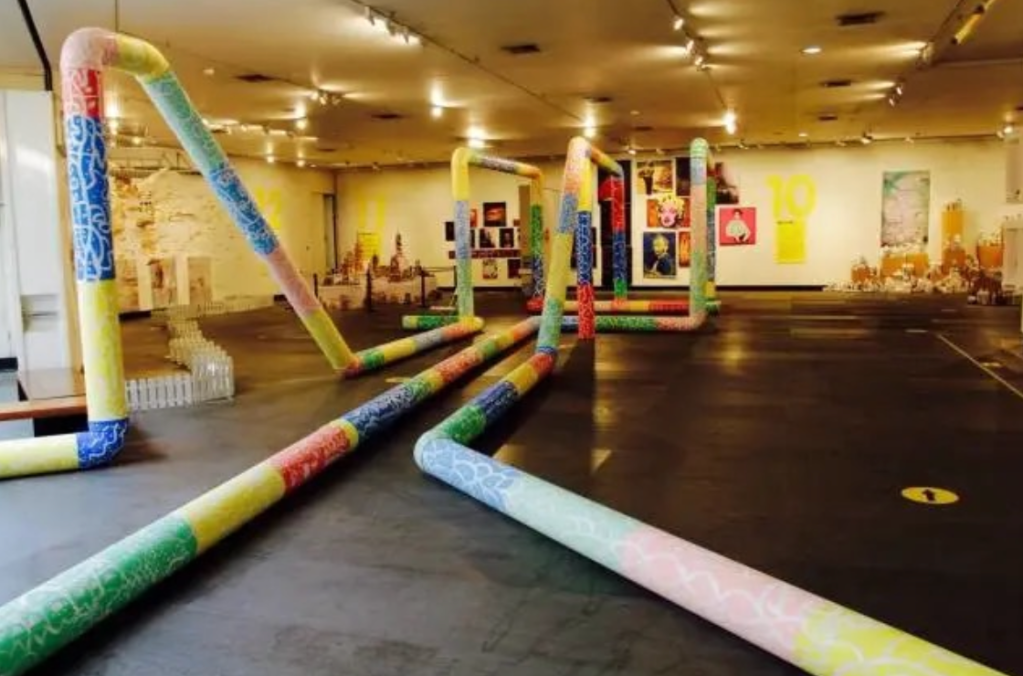
Renowned art critic Professor Xiaoyan Yang once said: “When Rauschenberg exhibited in China, visitors entered to find trash everywhere. But after understanding his work, they left seeing art everywhere!” This triennial echoes that sentiment. Beyond traditional two-dimensional paintings, the exhibition utilized seemingly insignificant everyday objects that were creatively rearranged and “recreated” by children, transforming ordinary “things” into “art.”
At the same time, it prompted visitors to ask questions: What is art? What kind of art are children making? What exactly does the Kids’ Triennial of Canton showcase?
I believe it’s a great achievement when an exhibition raises such questions. Therefore, I’d like to delve into the conceptual framework of the triennial and its ultimate impact, offering a reflection for readers.
Is This an Art Exhibition or an Education Exhibition?
What is a triennial? A triennial is a recurring exhibition format commonly seen in the field of art (or fine arts). Unlike expos or fairs held annually or quadrennially, or sporting events held every two or four years, triennials (or biennials) follow a two- or three-year cycle centered around a specific theme to facilitate research, exploration, and display.
Art differs from other disciplines because it requires continuity in its exhibitions. On one hand, this allows for greater public participation; on the other, contemporary art has evolved beyond simply presenting finished works. Today, the creative process itself is often displayed.
For example, during the 13th Kassel Documenta in 2012, Chinese artist Yan Lei displayed 360 celebrity portraits in a single space. Each day, a few paintings were secretly removed, spray-painted into abstract color blocks in a nearby garage, and quietly returned to the display. Over 100 days, by the exhibition’s end, all portraits had become abstract compositions, and the entire space transformed into an abstract artwork. Visitors only glimpsed moments of this evolution, unless they returned daily to witness the full process.
For these reasons, contemporary art exhibitions require extended durations. Prestigious art events such as the Venice Biennale and Kassel Documenta often last over six months, not including planning and preparation. Consequently, using a two- or three-year cycle for an exhibition plan, from conception to implementation to display, is both reasonable and practical.
In showcasing the art education outcomes of numerous kindergartens across Guangzhou, a three-year cycle is essential. Planning this exhibition alone took a full year, and the timeline was extremely tight. The process included research, planning, theme-setting, proposal finalization, committee formation, expert invitations, promotional training, artwork collection, evaluations, exhibition preparation, and installation.
This process wasn’t merely about producing an exhibition; rather, it aimed to establish an “origin” (starting point). An origin for the general public to begin paying attention to early childhood art education. An origin for experts, scholars, and frontline teachers to understand the state of early childhood art education in Guangzhou. An origin for fostering closer exchanges between art and early childhood education.
Through the efforts of the Guangzhou Education Bureau and the Art Research Society, the triennial will ideally evolve into a system of thematic exhibitions held every three years. This approach could elevate early childhood art education in Guangzhou and Guangdong Province to a nationally leading level, establishing it as a cultural brand that represents the city internationally.
Back to the question: “Is This an Art Exhibition or an Education Exhibition?” In essence, it is an educational exhibition that adopts an artistic format. However, it isn’t a purely educational showcase because it focuses on art education, emphasizing the artistic quality of the display. The goal is to use art to inspire audiences, prompting reflection on the nature of art and children’s art.
For preschool teachers attending the exhibition, the visual experience and thematic presentations encouraged them to reflect on whether they could incorporate more elements into their teaching practices, fostering greater creativity and potential in their students.
The interactive workshops provided further opportunities for teachers to engage deeply with one another, learning and exchanging ideas.
This exhibition’s educational significance far exceeds its display function. Therefore, to claim the exhibition merely used children’s innocence to implement adult artistic concepts would be a narrow interpretation. On the contrary, many installations were created by adults to serve children’s creativity!

What Role Does the Curator Play in This Exhibition?
The term “curator” has been part of the professional art lexicon for over decades, but it remains relatively unfamiliar to the general public. Some even jokingly mistake “curating” (策展) for “dismantling” (撤展) in Mandarin Chinese because the similarity of pronunciation. Of course, this is just a lighthearted quip. In reality, a curator is both the planner and executor of an exhibition, representing the curatorial team.
In China, the role of a curator primarily exists in independent, non-commercial exhibitions, thematic exhibitions, and non governance exhibitions. It’s rare to see curators formally appointed for governance exhibitions. For example, national art exhibitions and university graduate showcases often don’t involve curators. That’s why the Guangzhou Education Bureau and the Art Research Society’s decision to involve a curator in this official exhibition demonstrates exceptional vision and openness.
I was fortunate to be recommended for the chief curator role by Zhang Siyan, the vice president of the Art Research Society, chair of the Triennial review panel, renowned children’s art educator, and national first-class artist. After the Society’s leadership saw my independent exhibition Other Regionality—Youth Experimental Art Exhibition in 2013, they expressed their trust in my curatorial abilities. In November 2013, they proposed organizing a groundbreaking exhibition in the field of early childhood art.

As a specially appointed curator at the Memorial Hall of Lingnan Painting School and the teaching director of the Contemporary Arts Edu-Institute, I owe much of my expertise to Zhang Siyan. Upon returning from France in 2010, I benefitted from her guidance in curating exhibitions and art education, as well as her practical training in these areas. She has been both my mentor and a close friend.
Beyond work, we often chat about the state of art and education today, sharing aspirations to contribute to the development of contemporary Chinese art and education. These conversations eventually led to the establishment of the Contemporary Arts Edu-Institute. The Triennial became an opportunity to put these ideas into practice. I am also deeply grateful to the Society’s president, Guan Yingrou, and vice presidents Huang Runjuan and Liu Peiying for their unwavering trust and support of my curatorial work.
For this project, as the curator, I followed the framework and requirements set by the Guangzhou Education Bureau and the Art Research Society to analyze and organize the current state of early childhood art in Guangzhou. I aimed to present these findings in an objective and accessible manner, avoiding conventional “achievement showcases” and refraining from evaluating the quality of individual works or teaching plans.
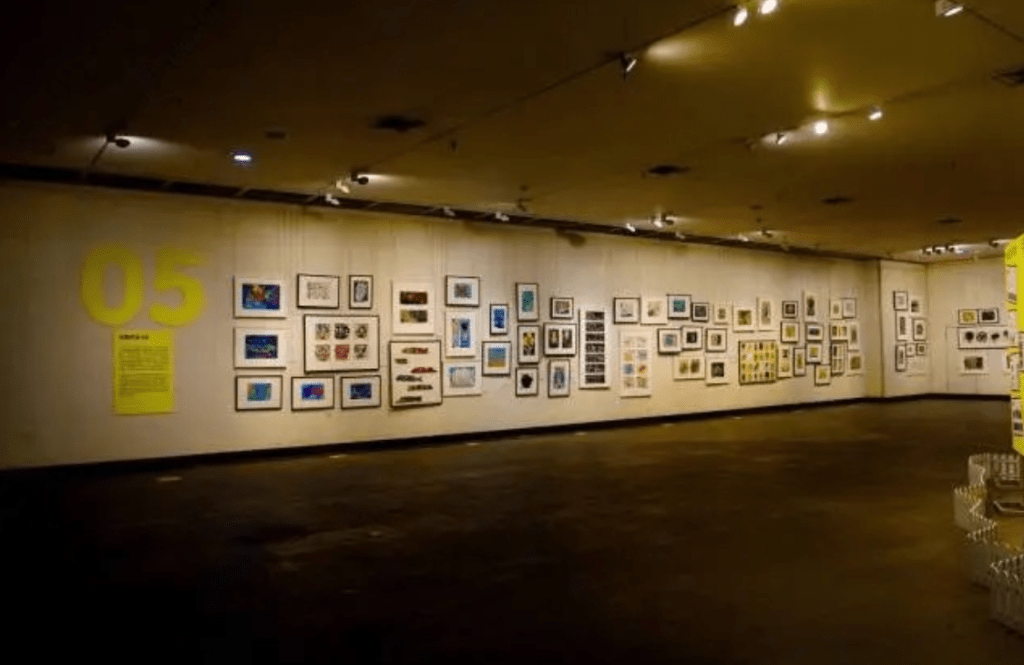
However, with input from senior expert jurors, we highlighted works and teaching plans they found exemplary, showcasing them to propose new directions and ideas for early childhood art education in Guangzhou. Among 17,000 submitted works from nearly 200 kindergartens, we selected 100 pieces to guide teachers across districts in rethinking how they appreciate and evaluate children’s art.
The goal was to determine what constitutes the most natural, lively, and endearing forms of childhood expression. We aimed to move away from a skill-focused, results-oriented perspective. Children’s art should be free and uninhibited. Understanding how to guide children appropriately, unlock their imaginations, and minimize interference with the final outcome is a complex art in itself. It is crucial to use exhibitions like this to raise questions, set expectations, and encourage self-reflection among educators.
Another significant portion of the exhibition involved installation works. From nearly 100 teaching plans, we selected over a dozen that integrated everyday elements—such as empty bottles, wooden blocks, popsicle sticks, stamps, dead branches, and fabric strips—for a concentrated display (due to limited exhibition space).
Each installation was a collaborative effort between several kindergartens. By using the same theme across different schools and displaying the results together, we revealed variations in teaching styles. Some educators were more hands-off, while others were more deliberate. Through this comparative approach, we encouraged teachers to reflect on their teaching styles—when to “let go” and when to “take control.” This exchange created a dynamic interaction between teaching and learning, achieving mutual growth for both.
As the curator, I could have taken a more straightforward approach: designing visual layouts, arranging exhibition routes, linking themes, and creating a few “gimmicks” for media coverage. But distilling the entirety of Guangzhou’s early childhood art education into a three-floor art museum was no easy feat.
However, through this exhibition, I gained invaluable insights. Observing the teaching plans submitted by kindergartens and art education institutions underscored the scale of art education in Guangzhou and highlighted the crucial interplay between “teaching” and “learning”.
Why Choose “Origin” as the Theme?
Every journey begins with an origin/a starting point. A person’s life begins in early childhood, as does their education. While early childhood art education in Guangzhou has existed for decades, the heightened emphasis on its importance is a more recent development, largely driven by the Art Research Society’s two decades of consistent efforts.
We cannot dismiss the contributions of the Art Research Society over the past 20 years, but their documentation remains sparse. This lack of resources necessitated the use of this exhibition as a comprehensive survey to establish a new “origin.”
Thankfully, the exhibition helped clarify where this origin lies. It revealed that Guangzhou’s early childhood art education remains contemporary and aligned with regional development, maintaining a relatively high standard nationwide. This serves as a testament to the role the Art Research Society has played over the years.
However, this recognition should not lead to complacency. Instead, it should serve as another “starting point” for exploring new directions and approaches tailored to the physiological and psychological development of children. By doing so, Guangzhou has the potential to produce world-renowned educational outcomes.
TheKids’ Triennial of Canton is a pioneering initiative, and I hope it will continue to thrive. The word “Canton” in its title should not merely denote an administrative region but instead represent a cultural brand. Through this brand, the triennial can showcase Guangzhou’s cultural and educational achievements to the nation and the world.
What Does the Exhibition Aim to Present to the Audience?
To answer this, we first needed to consider the potential audience. Who would visit this exhibition? Who were we trying to reach?
For me, these questions were persistent throughout the planning process. After studying in Paris and returning to China, I noticed a recurring phenomenon in the exhibitions I worked on: professional exhibitions often attracted large crowds during the opening ceremony, but attendance dwindled afterward.
The opening crowds were usually composed of acquaintances—friends, professors, friends of friends, and sometimes media personnel, who themselves eventually became friends. This phenomenon reflects a broader issue: the public education functions of most art museums in China remain underutilized. Art museums, as vital cultural resources for cities, are yet to be fully integrated into educational systems.
Recognizing this gap, I approached the triennial not only as a educational exhibition but also as a public education initiative designed to promote contemporary art. The target audience wasn’t just professionals but the general public.
The exhibition relied on children’s natural creativity to engage visitors, stripping away overly theoretical or esoteric language. While educational texts and teaching plans were preserved for teachers to explore, the visual layout was prioritized to convey the unfiltered vitality of children’s art.
Another notable aspect was the involvement of professional artists in the exhibition. This idea was initially met with skepticism, even from within the professional community. Critics questioned why artists were included in a children’s art exhibition.
However, once the exhibition opened, audience reactions silenced these doubts. Artists pursue beauty and truth, which align fundamentally with children’s innate nature. By selecting the right artists, their imagination and creativity can complement and amplify the children’s talents.
These collaborations not only enhanced the children’s creations but also broadened teachers’ perspectives, inspiring innovative approaches to curriculum development. The exhibition demonstrated the significant role artists can play in bridging art and education.
Of course, the exhibition wasn’t without its limitations. During the planning phase, we hoped to involve children in creating artworks during the exhibition itself, allowing them to experience the joy of participation. Unfortunately, due to concerns over crowd control, safety, and overall presentation, this idea was ultimately set aside. As a result, the exhibited works were presented as fixed installations, which may have given the impression that the pieces reflected adult intentions more than children’s creativity.
However, as mentioned earlier, the final presentation of these works depends heavily on the guidance provided by teachers. As a curator, my role was to maximize the visual impact of these pieces within the gallery space. In my view, the artworks were already compelling enough without needing to be overly stylized.
I overheard some visitors asking whether simply piling objects together could qualify as art. This question reflects a broader debate in traditional Chinese painting: the distinction between “meticulous craftsmanship” and “expressive spontaneity.” Art, especially children’s art, lies in the realm of expression and intent rather than technical precision.
I believe that criticism is a natural part of any exhibition. This triennial aimed to present an objective view of Guangzhou’s early childhood art education, inviting both praise and critique. Such responses demonstrate the openness and neutrality of the organizers, breaking away from the traditional practice of showcasing only successes and hiding flaws.
The leadership of the Guangzhou Education Bureau and the Art Research Society have taken a progressive stance, using the exhibition as a platform to hear diverse perspectives and drive advancements in art education.
Art Over Education, or Education Over Art?
For an individual to earn respect, they must first give the impression of being educated and culturally refined. This includes their educational background, cultural knowledge, and artistic literacy. Similarly, for a nation to command respect, it must possess a deep cultural foundation and a population with strong qualities and values.
In this sense, cultural arts and national education are crucial to China’s contemporary development. They will directly influence China’s global standing and level of respect 50 years from now.
Historically, however, in the educational structure familiar to most people in China, art has been treated as a minor subject, placed behind “morality, intelligence, and physical education,” and far below “Chinese, mathematics, English, physics, chemistry, history, geography, biology, politics, physical education, and health.” This relegation has caused art to be regarded as “insignificant” within the broader learning process.
I often emphasize that “visual experience is primary.” Humanity’s perception of the world and value judgments are predominantly shaped by visual experiences. Aesthetic sensibilities play a direct role in how we initially evaluate external objects, determining whether we “like” or “dislike,” “accept” or “reject,” “welcome” or “discriminate.”
The richer a person’s aesthetic knowledge, the more open they are to external stimuli, and consequently, the better they can learn and absorb knowledge. It is evident, then, that visual aesthetics—commonly understood as fine arts or visual arts—plays a crucial role in constructing an individual’s knowledge and cultural framework.
This contribution aligns with the often-discussed yet poorly understood concept of “quality” (素质).
Art (including visual arts and music) serves two critical purposes in human value judgment:
- Preserving existing aesthetic values: Art protects and maintains humanity’s cultural heritage, ensuring its continuity.
- Expanding horizons: Art opens humanity’s eyes to the unknown, whether distant and unfamiliar or nearby but overlooked.
Recognizing these two roles explains why contemporary art emphasizes interdisciplinary and cross-disciplinary research and creation.
Therefore, whether we frame the Kids’ Triennial of Canton within “art in education, early childhood education, and early childhood art education” or “education in art education, art education, and early childhood art education,” the discussion remains limited if viewed narrowly.


What Future Does the Triennial Hold for Guangzhou?
I was born in Guangzhou and have loved drawing since childhood. At the age of four, I began studying art at the art-focused kindergarten of the Liwan District Children’s Palace. I also took weekend art classes at the Guangzhou Children’s Palace, learning under Huang Weili and Guo Weixin, who remain my beloved mentors and friends to this day.
During that era, a pioneering group of children’s art educators, including Huang Weili, Guo Weixin, Zhang Siyan, Guan Xiaolei, and Su Shan, laid the foundation for Guangzhou’s children’s art development. Their forward-thinking approaches were nationally leading, and they were among the first to advocate for quality education in the arts.
Thirty years have passed since then. The students they nurtured, primarily born in the 1980s and 1990s, have now become integral members of society, contributing to its development. These individuals’ aesthetic values directly influence the cultural and physical landscape of this city.
This illustrates a vital point: the education children receive today can profoundly shape a city and its region’s future development. My words may sound overly serious, but if we fail to recognize this intangible force, the price we pay in the future will be heavy.
Our establishment of public education programs at the Memorial Hall of Lingnan School of Paintings and the Contemporary Arts Edu-Institute reflects a commitment to continuing Guangzhou’s pioneering spirit in children’s art education. These initiatives aim to integrate experimental teaching methods that “blend tradition and modernity, East and West,” conducting long-term interdisciplinary research and exploration between art and education. The ultimate goal is to use art to elevate overall human quality.
The Kids’ Triennial of Canton has provided a flexible framework for Guangzhou in the realms of art and education. With sustained development, it could become a platform for teachers, artists, students, and the general public to learn from one another. This platform could enhance public understanding of contemporary art, broaden teachers’ and audiences’ awareness of visual aesthetics, and improve cultural literacy overall.
Specifically, I hope the triennial evolves beyond a mere exhibition into a cultural ecosystem. Through workshops, expert forums, lectures, seminars, teaching products, and public art projects, it can form a cultural brand and a symbolic representation of Guangzhou. Such efforts could establish the Kids’ Triennial of Canton as a cultural hallmark that reflects Guangzhou’s artistic and educational achievements to the nation and the world.
Further Readings
- Kid’s Triennial of Canton Press Release (in Chinese) https://mp.weixin.qq.com/s/Nv06WMsT0vBMYmeuKSu_8g
- Let’s Join the exhibition-Kids Triennial of Canton (in Chinese) https://mp.weixin.qq.com/s/-ctOcn54RaV77WgUm-PHQg
- Walk into Children’s art world (in Chinese) https://mp.weixin.qq.com/s/QwfuP2yR6ie6G2S6t6ZEqw
 Steven Dragonn